
June 19, 2024
Role and Evolution of Satras and Namghars in Assam (GS5,GS1)
Satra and Namghar are integral institutions in Assam, deeply rooted in the socio-cultural and religious fabric of the region. They originated from the Bhakti movement spearheaded by the saint-scholar Srimanta Sankardev in the 15th-16th centuries.
Origins and Early Development:
•Sankardeva established the first Namghar in Bordowa (Batadrava) in 1468.
•Initially, Namghar was an embryonic stage and later developed after Sankardeva pilgrimage.
Concept and Structure:
•Namghar: A prayer house, socially central to rural administration.
•Satra: A residential spiritual school or monastery with facilities for devotees.
•Early Satras and Namghars were identical, serving as prayer and meeting houses.
Nomenclature and Evolution:
•During Sankardeva's time, these institutions were called "Than" or "Dham," not “Satra."
•The term “Satra" became popular post-Sankardeva, with the first full-fledged satra constructed in Barpeta by Madhavdeva.
Architecture:
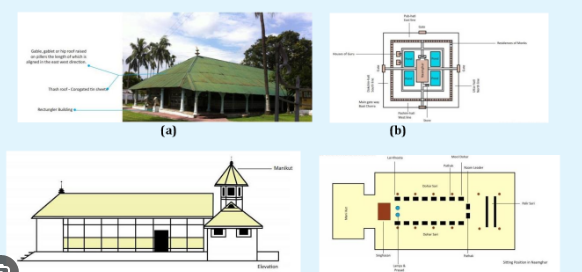
•Satra: Central Namghar, surrounded by devotees' huts (Hati).
•Namghar: East-west orientation, with a sanctum sanctorum (Singhasan) and assembly space.
•Symbolism: Sculpted pillars representing devotion (tortoise), dominance (lion), and sin (elephant).
Functionality:
•Namghars are used for prayer, meetings, cultural shows, and performing arts (Bhaona).
•Sankardeva integrated dance, song, and acting into worship, promoting spiritual and national consciousness.
Indigenous Influence:
•Namghar architecture is inspired by local tribal houses (Dekachang), aiming to attract tribes to Neo-Vaishnavism.
Post-Sankari Satra and Sanghati:
•Brahma Sanghati: Deviated from non-idolatry, reintroducing caste-based rituals.
•Purush Sanghati: Established by Sankardeva's grandsons, incorporates some Brahminical rites.
•Nika Sanghati: Strict adherence to non-idolatry, focused on good companionship and holy thinking.
•Kala Sanghati: Emphasises worship of "Guru," successful in abolishing the caste system, and played a role in the Moamoria rebellion.
Modern Influence:
•Satras and Namghars remain influential in Assamese society.
•Namghars outnumber satras and often operate independently.
•Despite differences within satras, most Namghars align with monotheistic Sankari ideals.
Cultural and Social Impact:
•Namghars are central to village life, often serving as the primary community centre.
•Vaishnavite or Sankari organisations emerged in the 20th century, uniting many Namghars under Sankardeva’s ideals.
Future Development:
•Ideological unity between Satra and Namghar is essential for the holistic development of Assamese society.