
June 12, 2024
Urbanization in India and Its Impact on Public Space: Way Forward (GS1)
Urbanization in India has accelerated over the past few decades, driven by economic growth, population increase, and rural-to-urban migration. This process has significantly transformed public spaces in urban areas, presenting both opportunities and challenges.
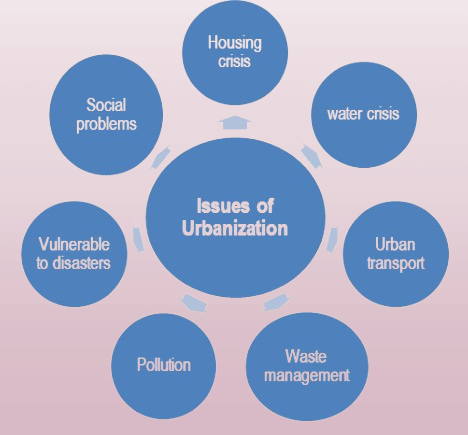
Impact on Public Spaces:
1.Reduction in Public Spaces:
Encroachment and Unauthorized Construction: Rapid urbanization has led to the encroachment of public spaces for unauthorized constructions and commercial activities.
Pressure on Land: Increased demand for housing, commercial establishments, and infrastructure has reduced the availability of public spaces like parks, playgrounds, and community centres.
2.Degradation of Existing Public Spaces:
Lack of Maintenance: Many public spaces suffer from poor maintenance due to inadequate funding and management by local authorities.
Pollution and Waste: Urban areas face significant pollution and waste management issues, which degrade the quality and usability of public spaces.
3. Socio-Economic Disparities:
Inequitable Access: Public spaces in affluent neighborhoods are often better maintained and equipped compared to those in poorer areas, leading to inequitable access.
Exclusion of Marginalized Communities: Informal settlements and slum areas often lack adequate public spaces, affecting the quality of life of their residents.
4.Cultural and Social Impacts:
Loss of Cultural Heritage: Urbanization sometimes leads to the demolition of historical and culturally significant public spaces.
Erosion of Community Interaction: Reduced and poorly maintained public spaces can lead to decreased social interactions and community activities.
Way Forward:
1.Policy and Planning:
Integrated Urban Planning: Incorporate public space development into urban planning processes. Ensure that new urban projects allocate adequate areas for public use.
Regulatory Frameworks: Strengthen laws and regulations to protect public spaces from encroachment and unauthorised use.
2.Investment and Funding:
Public-Private Partnerships (PPP): Encourage PPPs to fund the development and maintenance of public spaces.
Government Funding: Increase budget allocations for the creation and maintenance of public spaces in urban areas.
3.Community Involvement:
Participatory Planning: Engage local communities in the planning and management of public spaces to ensure they meet the needs of the population.
Awareness Programs: Conduct awareness campaigns to highlight the importance of public spaces and encourage community stewardship.
4.Sustainable and Inclusive Development:
Green Spaces: Promote the development of green spaces to improve urban environmental quality and provide recreational areas for residents.
Inclusive Design: Ensure that public spaces are designed to be accessible to all sections of society, including women, children, the elderly, and people with disabilities.
5.Technological Solutions:
Smart City Initiatives: Leverage technology to enhance the management and utilization of public spaces. Use data analytics, IoT, and other smart solutions for efficient maintenance and security.
Digital Platforms: Develop digital platforms for public feedback and suggestions regarding public space management.
Data Summary:
Urban Population Growth: According to the World Bank, India’s urban population grew from 31.28% in 2011 to 34.47% in 2019.
Public Space Availability: Reports suggest that many Indian cities have less than 5% of their land area dedicated to public spaces, compared to the recommended 15-20%.
Maintenance and Investment: A study by the Centre for Urban and Regional Excellence (CURE) indicates that only a small fraction of municipal budgets is allocated for the maintenance of public spaces.
Access Disparities: Data from the Ministry of Housing and Urban Affairs (MoHUA) reveals significant disparities in access to public spaces, with low-income neighbourhood often lacking adequate facilities.
Conclusion: The impact of urbanisation on public spaces in India is profound and multifaceted. Addressing these challenges requires a comprehensive approach involving policy reforms, increased investment, community participation, sustainable practices, and technological advancements. By adopting these measures, India can enhance the quality, accessibility, and sustainability of its public spaces, ensuring they serve as vital assets for urban communities.